

Latest
Video
07 February 2026
A Living Legacy | United Nations
Learn more
Speech
29 January 2026
Speech by UN Resident Coordinator, Sarangoo Radnaaragchaa at the Tripartite High-Level Round Table on Social Dialogue and Dispute Resolution
Learn more
Video
28 January 2026
Youth, power and possibility, with Felipe Paullier | ASG for Youth Affairs | Awake at Night
Learn more
Latest
The Sustainable Development Goals in Kazakhstan
The UN system in Kazakhstan stands firmly in support of the country’s aspiration to join the ranks of the 30 most developed countries of the world by achieving the OECD standards. We remain convinced that the 2030 Global Agenda for Sustainable Development and its 17 SDGs are an excellent instrument that can help Kazakhstan to effectively achieve its development aspirations as articulated in Strategy 2050 and the subsequent reform agenda.
Publication
15 January 2026
The United Nations Sustainable Development Cooperation Framework 2026-2030 for Kazakhstan
The United Nations Sustainable Development Cooperation Framework (Cooperation Framework) 2026-2030 for Kazakhstan is a bold and transformative blueprint designed to accelerate progress towards sustainable development. Anchored in national priorities and the 2030 Agenda for Sustainable Development, this Cooperation Framework represents a strategic partnership between the UN Country Team and the Government of Kazakhstan, ensuring that no one is left behind as the country advances towards inclusive prosperity. The Cooperation Framework is the result of analytical, consultative and collaborative work of the UN Country Team with the Government, civil society, experts, youth representatives and private sector. These partners were involved in two foresight exercises, through focus group discussions and other consultations. Regional UN offices and Issue-Based Coalitions were consulted as well.Kazakhstan, an upper-middle-income country, has made remarkable strides in economic growth, social progress, and institutional development. With a diverse and resource-rich economy, the country has maintained strong growth, yet it faces challenges such as heavy reliance on oil exports, regional economic disparities, demographic shifts, and environmental sustainability concerns. The UN Country Team, leveraging its expertise, convening power, and commitment to international norms, will support Kazakhstan in overcoming these challenges while fostering innovation, resilience, and equity.
1 of 3

Video
28 January 2026
Youth, power and possibility, with Felipe Paullier | ASG for Youth Affairs | Awake at Night
A medical doctor by training, Dr. Felipe Paulier is a passionate advocate for young people. Two years ago, aged just 32, his life took a new turn when he became the first-ever Assistant Secretary-General for Youth Affairs, the youngest senior appointment in the history of the United Nations.
“Leaving young people at the sidelines of how we find solutions is not the way. It's really bringing them [in], because on many of the things, the solutions will come from them.”
The UN Youth Office believes that positive change is rooted in empowering young people to meaningfully participate in decisions that impact their lives and futures. In this episode, Felipe Paulier reflects on youth demands for peace and opportunity, on the stubborn barriers to change, and shares why he always prescribes reconnecting with nature as a cure for digital overwhelm.
1 of 3

Story
20 January 2026
In rubber boots and truly happy - Amina's journey from office life to eco-stable
Six years ago, Amina Yessina left a successful career as a financial director in a prestigious company to pursue a childhood dream: to work with horses professionally and build her own stable.The first time Amina ever sat on a horse was in her distant childhood, and it lasted only for a few minutes. However, that was enough to ignite a deep desire to one day have a horse of her own."I remember when I was little, my mom and I would go to our summer cottage, and not far away in the fields, horses were grazing. I would sneak away to watch them. I used to spend all my free time observing and sketching horses. One day, a herder approached me. He was thirsty and asked me where he could get water. I pointed him to the cottages, and he offered me to ride on his horse. He walked beside us, holding the reins," Amina recalls.Amina's father passed away when she was a little girl. His final wish was that she become an economist and find a respectable job. And so did she, shelving her dream for a later time. Years passed. She built a career and rose to become the financial director of a large organization."In 2020, in the middle of the pandemic, I started thinking about what I really wanted in life. After all, we only get one. I resigned and joined a stable as a regular worker, earning 500 tenge per horse ride. And there I was, leading a horse around the circle, bridle in hand, dressed in stable-worn clothes and rubber boots, and I couldn’t stop smiling. I was so happy! " she shares. Slowly but surely, Amina pursued her dream. She registered a public association, attended meetings, spoke about equine work, and began developing hippotherapy, though initially at a partner's stable.Hippotherapy is a method of rehabilitation and social integration for people with disabilities, and often a first step toward adaptive equestrian sport. The interaction with a horse, which acts as a living simulator, helps improve coordination, balance, and muscle tone, while also enhancing the psychological and emotional well-being of the riders. It offers individuals something they often lack elsewhere: the freedom of movement, the possibility of athletic achievement, renewed self-confidence, and the joy of full participation in both sport and community life."After six years of working with horses, I’ve come to believe hippotherapy is the most humane approach to equine care. My business partners support all my ideas. We have horses for sport, available for rent. But for hippotherapy, we use specially trained horses that aren’t confined or tethered — they graze freely. Children come for rehabilitation with various conditions, such as cerebral palsy or musculoskeletal disorders. In collaboration with their doctors, we tailor exercises and intensity to each child,"Amina explains.Yet Amina's vision extended further: to build a stable based on circular economy principles. One major challenge for farms is animal waste. On average, a horse produces 20 kilograms of manure per day — more than 7,000 kilograms per year. Amina started exploring ways to process the waste. Her project received support from the seventh phase of the GEF Small Grants Programme and UNDP in Kazakhstan.Together with her partners, Amina tested two methods of manure processing: one using earthworms to produce vermicompost, and the other using bio-bacteria to produce biohumus. "We currently have two pilot sites in the Akmola and Karaganda regions. The first uses earthworms, but it’s a long and labor-intensive process. The second uses bio-bacteria, and the process takes about two months," says Amina. Now, all the manure at the stable is converted into biohumus, and it is used as fertilizer on fields growing forage crops both on their own lands and in affiliated farms. "We grow potatoes, and normally we use mineral fertilizers on our fields. Now we’re trying eco-friendly organic ones. We'll harvest the next crop in a year, and thanks to our organic fertilizer, the quality of our produce will definitely improve," shares a farmer involved in the project.In 2024, Kazakhstan adopted the Law "On Organic Production and Circulation," followed by a national standard on organic fertilizers: "Vermicompost. Technical Specifications." Amina is confident these legislative changes will help farmers manage livestock waste and produce effective organic fertilizers. "I shared with my partners the news about the legislation and the idea of a closed-loop eco-stable, where all waste is processed and reused. They supported me, and we launched a joint project. It has since expanded and now it covers two regions," she says.Amina’s dream has become something much bigger than just a stable. She supports children with disabilities, recycles waste, engages local communities, and puts the principles of the circular economy into real-world practice."I know we won’t change the world in a day, but every ride a child with a disability makes on horseback is a step forward, and every kilogram of manure turned into fertilizer is a gift to the Earth. We’re not just building a stable, we’re building a new model where care, ecology, and humanity move forward together."
1 of 3

Story
13 December 2025
Aigerim Kussainkyzy, the woman blending Kazakh tradition and feminism to build a better future
Can feminism be rooted in national identity? A scholar, feminist, and human rights advocate, Aigerim Kussainkyzy from Kazakhstan, believes it can.Kussainkyzy is a 35-year-old senior lecturer and researcher at Maqsut Narikbayev University in Astana. Her approach blends academic rigor with activism, focusing on advancing gender equality and women’s economic empowerment.Equally inspired by Eastern and Western thinkers, she seeks to integrate feminism with Kazakhstan’s tradition by promoting the idea that gender equality and women’s rights are closely tied to the country’s history and values.Addressing the “dream gaps”Born into a Kazakh-speaking family of teachers, Kussainkyzy developed a feminist perspective long before she understood the term.“When I was about 12, I told my physics teacher I wanted to be the first Kazakh female astronaut. She laughed and said, ‘Come on, you’re just a girl’,” she recalls.Kussainkyzy argues that discouraging moments like this highlight why societies must address not only pay gaps but also the 'dream gaps' that limit the aspirations of young girls worldwide. She explains that children up to the age of 5 have similar hopes and dreams. Afterward, their expectations become more gendered, slowly adhering to societal norms.“Most societies teach girls to stay at home or do caretaking professions and boys to excel in science or business, leading to the perpetuation of inequality. Even my father used to say, ‘girls should be girls and boys should be boys’. I was defiant, so I chose to study law. I wanted to fight back,” she recalls."Most societies teach girls to stay at home or do caretaking professions and boys to excel in science or business, leading to the perpetuation of inequality." – Aigerim KussainkyzyExcelling academically, Kussainkyzy earned scholarships that led to a Master’s in International Business Law from the University of Montreal and a PhD in Public Administration from Narxoz University in Almaty. When she became a university lecturer herself, she decided to inspire her students to dream big and challenge patriarchal limits.Building a powerful nation through education“If half of the nation is uneducated or unemployed, you cannot have a powerful nation,” she notes, quoting Nazipa Kulzhanova, Kazakhstan's first female journalist, translator, ethnographer, and educator who championed women’s rights during the first half of the 20th century.According to Kussainkyzy, 55% of present-day Kazakhstani scientists are women, yet while they dominate education and medicine, only 30% work in STEM fields. This is why she is actively pushing for more equal distribution of genders across the sectors, particularly in STEM, aligning her work with the “Full and equal decision-making power” area of the Beijing+30 Action Agenda, a voluntary, action-oriented platform to accelerate the implementation of the Beijing Declaration and Platform for Action and the 2030 Agenda.Speaking about the principles outlined in the Beijing Declaration, she emphasizes that Kazakhstan was one of the first central Asian countries to establish a national entity to promote gender equality, and it was called the Commission on Women, Family and Demographic Policy in 1998.Changing the narrative around feminismSelf-identifying as a feminist, Kussainkyzy believes it is important to root her advocacy in her country’s tradition. Using the Kazakh language, she frames feminism as an integral part of the nation’s cultural fabric, countering stereotypes that portray it as negatively.“Many still have rigid ideas of how Kazakh women should look, dress, and behave. To connect with them, we must ground the feminist message in our culture and values,” she explains.A tragedy that inspired changeIn 2023, collaborating with a team of experts and public servants, she contributed to drafting a new law against domestic violence that criminalized battery and intentional harm. The public united and closely watched the open trial of a high-profile businessman and former politician who was sentenced to 24 years in prison for the murder of his wife.The Law on Strengthening Women’s Rights and Safety of Children was signed by the President of Kazakhstan in April 2024, marking a big victory for all women and girls across the country.“The law was a major step forward, but if I said violence is not only physical violence, I’d still get a lot of backlash. So our next big goal is to push for public recognition of all forms of domestic abuse: physical, but also sexual, emotional, and economic,“ Kussainkyzy says, outlining her path for the years to come.Notably, in July 2025, President Kassym-Jomart Tokayev enacted a new law that imposes criminal penalties for stalking and forced marriage in Kazakhstan. These legal reforms underscore Kazakhstan's dedication to combating all forms of violence and aligning with international human rights standards.Embracing your criticsIn 2024, she moved from Almaty to Astana to pursue her second PhD, this time on gender equality, and to be closer to the decision-makers.“Criminalizing domestic violence was a crucial first step. Parliament is working on new anti-harassment legislation, which we hope will pass soon. The labor code doesn’t yet define harassment, so we’re working to add provisions to protect women in the workplace,” she says eagerly.Knowing that the real change won’t come without public support, Kussainkyzy and her students often engage in social media debates, hoping to influence younger generations of Kazakhs. Now and then, there is pushback, but she knows how to stand her ground.“Some people in Kazakhstan dislike me for being a feminist, it's often because they're afraid of gender equality. So, I tell them: don’t be afraid; it’s not about women being superior but equal. And we can achieve it together,” she says with a smile. This story is a part of the Beijing+30 regional communications campaign ‘Unstoppable’, aimed at marking the 30th commemoration of the Beijing Declaration and Platform for Action. The views expressed in this story are those of the protagonist and the author and do not necessarily reflect the views of UN Women, the United Nations, or any of its affiliated organizations.
1 of 5

Story
28 November 2025
Kazakhstan joined the UN global campaign against gender-based violence
On 25 November in Astana, the “End Violence” Film Festival was officially opened, marking the launch of the UN global campaign “16 Days of Activism against Gender-Based Violence.”The festival is organized by the UN Country Team in Kazakhstan — the Office of the UN Resident Coordinator in Kazakhstan, UNFPA, UNICEF, UNV, UN Women, and the Central Asian Alliance to End Gender-Based Violence, in partnership with inDrive and the Alternativa project.The festival programme features four full-length films — three fiction films and one documentary — from Kazakhstan, Kyrgyzstan, and Nepal. Screenings will take place in Astana and Shymkent and will be free of charge for the general public upon prior registration. From social norms to digital threats: the spectrum of violence is wideningAccording to UN data, one in three women worldwide experiences violence at least once in her lifetime, with approximately 1.3 billion people globally affected by different forms of violence. The problem remains widespread due to persistent stereotypes and social norms that continue to justify or silence violence.In 2025, the UN global campaign “16 Days of Activism against Gender-Based Violence” focuses on the theme “Ending Digital Violence against All Women and Girls.” Today, the digital environment is becoming one of the most dangerous spaces — ranging from online abuse and harassment to the non-consensual sharing of intimate images, deepfakes, and gender-based disinformation.Fewer than 40 per cent of countries worldwide have laws that protect women from online harassment and abuse, leaving 1.8 billion women and girls effectively without legal protection.Collective action as the key to changeThe opening of the festival brought together representatives of international organizations, influencers, actors, experts, human rights defenders, and youth. Through the language of cinema, participants sought to draw attention to an issue that affects billions of people worldwide. The UN Resident Coordinator in Kazakhstan, Ms. Sarangoo Radnaaragchaa, emphasized that gender-based violence remains a challenge across all countries and cultures. She noted that changing societal attitudes requires diverse tools — including art and public dialogue — that help address complex issues and promote equality:“May the films presented at this festival not only move us emotionally, but also inspire action — toward respect, mutual support, and the creation of a world in which every woman and every girl feels safe.”The UNICEF Representative in Kazakhstan, Dr. Rashid Mustafa Sarwar, highlighted that children and adolescents are among the most vulnerable groups, particularly online. He stressed that it is the responsibility of society and the state to ensure a safe environment for every child’s development, so that every girl and every boy grows up knowing their rights are protected.The UNFPA Representative in Kazakhstan and UNFPA Country Director for Kyrgyzstan and Turkmenistan, Chinwe Ogbonna, noted that digital violence often becomes an extension of offline threats. She underscored the need for more accessible support services, emphasizing that violence is a violation of human dignity regardless of where it occurs — within the family, the workplace, or online.“Digital violence causes serious harm to the health, safety, and well-being of survivors. It often extends beyond the online space — through stalking, harassment, physical violence, or even femicide. We must speak openly about this form of violence and strengthen digital literacy,” said Dr. Jerene Guven Gures, Head of the Central Asia Coordination Office of UN Women and Representative of UN Women in Kazakhstan.Representatives of UN Volunteers highlighted the important role of youth and volunteers as drivers of conversations on non-violence and equality. Cinema as a space to address what is often left unspokenAt the festival opening in Astana on 25 November, invited guests watched the film “Bauyryna Salu” by Askhat Kuchinchirekov — a drama about a boy who, according to an ancient Kazakh tradition, is raised by his grandmother. After her death, he returns to his parents and must rebuild relationships with people who are biologically close but emotionally distant. The film subtly reveals the complex emotions and experiences often left unspoken behind this tradition.The screening was followed by a discussion with actors and experts on gender-based violence. The film evoked a strong emotional response and served as a starting point for a broader conversation on how cultural traditions, social pressure, and the lack of systemic support affect people’s lives.Discussion participants — actor Aidos Auyesbayev, GBV expert Aigerim Kussainkyzy, and actor Aziz Beishenaliev, a HeForShe Central Asia ally — noted that art helps re-examine familiar social scenarios and bring to light topics that often remain taboo.In Shymkent, screenings began on 28 November with a film by Kyrgyz director Mirlan Abdykalykov, telling the story of 19-year-old Umut, who becomes an accidental victim of bride kidnapping — a practice often justified as a “tradition” but used today as a form of violence and coercion. Based on real stories of women and girls subjected to forced marriage, the film highlights how distorted cultural norms continue to destroy lives and futures.This screening was followed by a discussion with Tynchtik Abylkasymov, the film’s screenwriter, and Vera Zakutnaya, Executive Director of the Sana-Sezim Foundation. Why the festival matters for KazakhstanThe festival holds particular significance for Kazakhstan. As in many countries worldwide, cases of online harassment and digital violence are increasing, especially among young people. In response, Kazakhstan is strengthening efforts to ensure online safety by updating legislation, expanding digital literacy, and enhancing support services.The creative community also plays a critical role in raising socially important issues and fostering a culture of zero tolerance for violence. The “No Violence” Film Festival demonstrates how art and open dialogue can help address complex challenges and support those affected by violence.
1 of 5

Story
26 November 2025
Astana Hosts Central Asia Forum on the New Silk Way to Sustainability
The Central Asia Forum “New Silk Way to Sustainability” was held in Astana, bringing together business leaders, government representatives, UN officials, development partners to advance regional cooperation and accelerate progress toward the 2030 Agenda for Sustainable Development. The high-level event was jointly organized by the UN Global Compact Network Central Asia and the United Nations in Kazakhstan. The Forum gathered over 100 representatives of UN Global Compact member companies and partners from Kazakhstan and across Central Asia, underscoring the growing role of the private sector in driving innovation, inclusive growth, and sustainable transformation in the region. Participants discussed priority issues including decarbonization, ESG leadership, energy transition, digitalization and AI, women’s entrepreneurship, youth engagement, and public–private partnerships for sustainable development. Opening the Forum, Ms. Sarangoo Radnaaragchaa, UN Resident Coordinator in Kazakhstan, emphasized the critical role of responsible business at a time when the window to deliver on the SDGs is narrowing:“The private sector is a critical driver of innovation, job creation, sustainable supply chains, and climate-resilient growth — and must align its strategies and investments with the 2030 Agenda, because the window to deliver is narrowing.” She noted that the Forum builds on strong momentum, including the opening of the UN Global Compact Multi-Country Office in Almaty and the continued expansion of the Network across Central Asia, now engaging more than 100 member companies in Kazakhstan alone. Referring to the newly signed UN Sustainable Development Cooperation Framework (UNSDCF) 2026–2030, Ms. Radnaaragchaa stressed that the private sector is indispensable across all four priority areas — empowered people and strong institutions, a resilient and inclusive economy, a sustainable environment, and strengthened social cohesion. The Forum also featured the SDG Innovation Accelerator Award Ceremony, recognizing innovative ESG solutions and the growing engagement of young professionals in advancing sustainability across the region. Concluding the discussions, participants reaffirmed their commitment to strengthening regional cooperation, responsible business practices, and multi-stakeholder partnerships, positioning the “New Silk Way to Sustainability” as a shared pathway toward inclusive and resilient development in Central Asia.
1 of 5

Story
12 November 2025
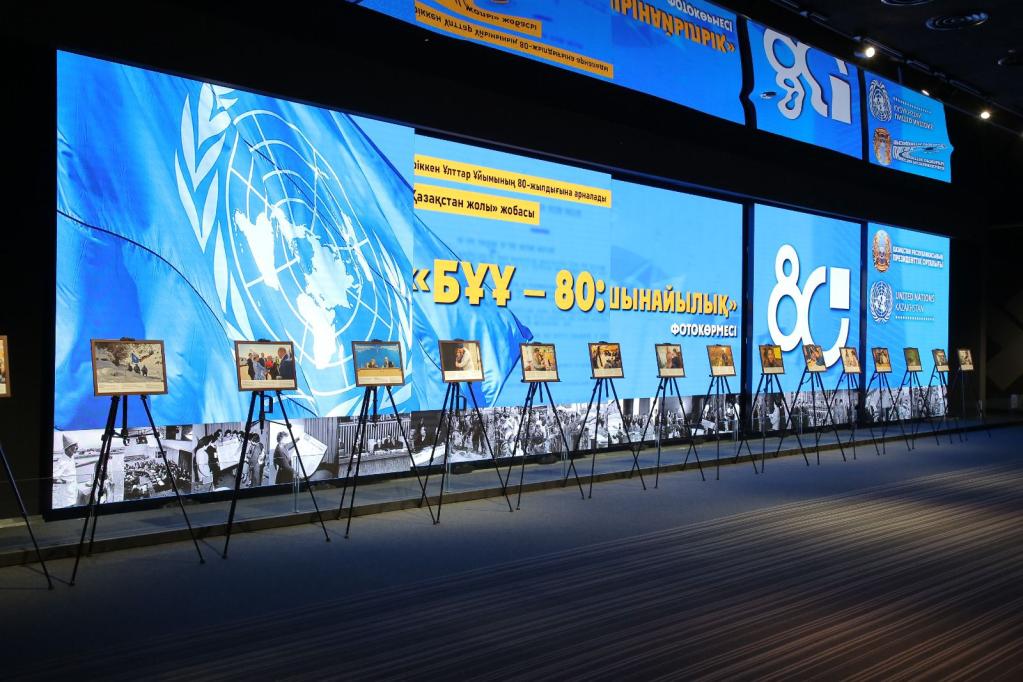
UN-80: Unfiltered exhibition opens in Astana with 80 rare shots
Today “UN-80: Unfiltered” photo exhibition launched in Astana as a striking, archive-driven event that reveals new facets of the United Nations’ 80 years history — from everyday fieldwork to decisive turning points, from tension before critical decisions to the relief that follows success. The event was organized by the Presidential Center of the Administrative Department of the President of the Republic of Kazakhstan in partnership with the Office of the UN Resident Coordinator in Kazakhstan. Bringing together 80 photographs from the official UN archives — many rarely seen or previously unpublished — the exhibition offers an unvarnished, human portrait of the UN at work: faces and emotions, fatigue and resolve, choices and consequences that power the machinery of multilateral cooperation and humanitarian action. The opening gathered more than one hundred representatives of government institutions, the diplomatic corps, international organizations, civil society, academia, and the media — underscoring Kazakhstan’s role as a regional convener and the strong public interest in the UN’s “behind-the-scenes” story. Opening the event, UN Resident Coordinator in Kazakhstan Sarangoo Radnaaragchaa noted: “UN-80: Unfiltered is more than an exhibition — it is an invitation to see the United Nations as it truly is, through moments of service, duty, and hope. These images remind us that the UN is not a building in New York or Geneva, but a living network of people — from peacekeepers and doctors to volunteers and students — whose quiet actions bring global goals closer to home. Like photography, diplomacy is an art of attention: it asks us to frame the essential, to find light amid complexity, and to recognize the human story in every challenge.”Curated to move beyond formal protocol shots, “UN-80: Unfiltered” highlights unexpected angles and intimate moments that transform routine meetings and missions into compelling visual narratives. The collection is a reminder that behind every global decision and humanitarian mission stand people — their work, responsibility, and compassion. The exhibition runs for one month, until 12 December 2025. Entry is free to all visitors. The display is structured in chapters that trace the UN story by decades, spotlighting milestones and achievements across each period. A dedicated chapter highlights UN–Kazakhstan cooperation, while a special “UN & Me” section showcases the accomplishments of the UN Country Team in Kazakhstan and how its work has changed the lives of ordinary people.Venue: Presidential Center, Bokeikhan St. 1A, Astana
1 of 5
Story
07 November 2025
A unique high-altitude mural in Almaty marks the UN’s 80th anniversary
Today, at an elevation of 3,200 meters in Shymbulak, a large-scale mural by Adil Aubekerov was unveiled to mark the 80th anniversary of the United Nations. The monumental painting, measuring 36 × 6 meters, was created at the initiative of Living Atmosphere with the support of Bank CenterCredit, in partnership with the Shymbulak resort and the UN Office in Kazakhstan. It has become a landmark event in the city’s cultural agenda and the UN80 anniversary programme. Opening the ceremony, Vlastimil Samek, Representative of the UN Department of Global Communications, noted: “This mural was not commissioned by the United Nations — it was born from the community itself, from the initiative of the private sector and the support of local partners. And that is the true meaning of the Sustainable Development Goals. Here in Shymbulak, it reminds us that art can speak where words no longer work. And it calls on each of us to build a world where innovation serves people, nature is protected, and no one is left behind.”The presentation brought together representatives of public organizations, cultural and academic communities, diplomatic corps, and media. Guests were introduced to the concept and history of the project, after which resort specialists led an orientation tour, highlighting the particular features of the location and the technical solutions required to implement the work in high-altitude conditions. “We want Shymbulak to become a point of attraction — not only for athletes, but also for the creative community, for the social scene, for those who shape the mood, culture, and style of our time. Shymbulak is our heritage, and we want it to live, grow, inspire, and bring people together,” said Nurlan Seitkazin, Managing Director of Shymbulak Development. “The concept of the mural draws on the visual and intangible heritage of nomads, translating its symbolic language into a contemporary artistic form. Each fragment carries its own memory. By bringing them together, I speak about what makes us a community — respect for nature, for neighbours, for peace. For me, this mural is a mosaic of values that the UN has upheld for 80 years, and the gaze of a nomad turned toward tomorrow,” emphasized artist Adil Aubekerov.This is the first and largest high-altitude mural in the world dedicated to the United Nations, created in the year of the Organization’s 80th anniversary. While many major art projects worldwide have addressed the UN over the decades, this work stands out for its powerful visual representation of the UN mandate and the Sustainable Development Goals, rendered through the symbols of Kazakh nomadic culture. “We believe in a new era of patronage: supporting art is as natural as taking care of one’s home,” says Laura Adamova, founder of Living Atmosphere. “Our company creates furniture solutions for a new time — we choose longevity over disposability, meaning over noise. In this sense, we speak the same language as the artist: we shape spaces that feel good to live in and that one would want to pass down to future generations. That’s why Adil’s mural for us is not just a high-mountain painting, and certainly not a PR move, but a statement piece — a legacy that looks to the sky and stands firmly on its values.”Aubekerov’s artistic language combines a deep attention to traditional visual systems with an interest in biology and animalism: from Paleolithic petroglyphs and the “animal style” to contemporary urban graphics. Line and colour function as an interweaving of worlds and ecosystems in which humanity and nature are in balance, while an improvisational approach, akin to the spirit of ‘aitys’, gives the composition an inner dynamism. In the UN’s 80th anniversary year, the Shymbulak mural resonates as a visual manifesto of shared responsibility — a meeting point of art, nature and society for a conversation about peace, human dignity and our duty to future generations. The UN80 mural is the largest high-altitude art installation dedicated to the United Nations: it spans 216 m² with dimensions of 36 × 6 m. Delivered in high-mountain conditions, the project faced inherent challenges such as sharp temperature fluctuations, thin air, wind loads, and complex logistics for materials and crews. These factors required bespoke technical solutions and meticulous planning. As a result, the structure simultaneously performs a protective function and serves as a large-scale artistic landmark visible to every visitor to the resort.
1 of 5

Press Release
27 January 2026
The Secretary General’s message for the International Day of Commemoration in Memory of the Victims of the Holocaust
Today we honour the memory of the victims of the Holocaust with solemn reflection and unwavering resolve.We mourn the six million Jews murdered by the Nazis and their collaborators – as well as the Roma and Sinti, the people with disabilities, and countless others who perished.Each victim had a name. Each victim had hopes and dreams. And each of those victims had their rights systematically denied and destroyed.When we remember these indisputable truths, we remember their humanity.We grieve for all that was lost and all that might have been.The Holocaust was not inevitable.Its architects made their intentions clear. Their hatred and violence unfolded in plain sight.The facts are undeniable. Yet today we see the forces of distortion and denial on the march.Antisemitism, bigotry, racism and discrimination are being fuelled by dehumanizing rhetoric and enabled by indifference.We must take a stand – to honour past victims, and prevent further atrocities.We must renounce hatred and injustice wherever they appear.We must defend the right of every person to live free from fear, in dignity and peace.This is the foundation of the United Nations.On this day – and every day – let us honour the memory of the victims of the Holocaust by reaffirming our shared humanity, upholding human dignity, and defending the values that unite us all.
1 of 5
Press Release
14 June 2023
FAO conducts a series of trainings to address obsolete pesticides and contaminated soils in Kazakh agriculture
The trainings aimed to equip about 90 participants, including national and regional authorities, inventory teams, and relevant stakeholders, with the knowledge and tools to establish a national inventory of obsolete pesticides and develop effective management and disposal strategies based on the inventory data.
The workshops were organized as part of of the FAO project “Lifecycle Management of Pesticides and Disposal of POPs Pesticides in Central Asian countries and Türkiye” funded by the Global Environment Facility (GEF).
Kazakhstan, with its vast arable land covering over 21 million hectares, faces important challenges from the remnants of Soviet-era obsolete pesticides and soil contamination from persistent organic pollutants (POPs). The improper management and disposal of these chemicals pose serious risks to human health and the environment. Today, data on the location, type and amount of obsolete pesticides at the country’s 727 pesticide stores is lacking. Also, it must be assumed that there are many additional sites, where pesticides have been buried without proper environmental safeguards.
To address this issue, FAO has developed two methodologies. The first method is appropriate for obsolete pesticides in the packaging in stores, while the second, known as Rapid Environmental Assessment (REA), evaluates potentially contaminated sites. Both methodologies provide the information to assess risks to the environment and health and prioritise risk management measures.
The 3-day training programs conducted by FAO aimed to enhance the knowledge and skills of inventory teams and among national and regional governmental authorities. The training covered various topics such as planning the inventory process, risks from obsolete pesticides and health protection measures for the inventory teams, data collection, data processing and storage.
During the training, participants visited former pesticide stores, applying the two methodologies and collecting soil samples for chemical analysis. The participating agencies from four regions (Turkestan, Atyrau, West Kazakhstan and Almaty regions) developed work plans and committed to providing administrative and technical support throughout the inventory process.
The training programs received positive responses from local executive state bodies, Kazakhstan’s Ministry of Ecology and Natural Resources, the Ministry of Health, the Ministry of Agriculture and several NGOs. Their active participation ensured the success of the training programs and highlighted the collective commitment to addressing the pressing issues related to obsolete pesticides and contaminated soils in Kazakhstan.
FAO will conduct additional trainings in other regions of Kazakhstan, with inventory work scheduled for 2023. By the end of this year, data from the country as a whole will be gathered. Based on that, FAO anticipates a significant improvement in the understanding and management of obsolete pesticides and contaminated soils in Kazakhstan.
The establishment of a national inventory will provide a solid foundation for developing effective strategies and undertaking practical work to mitigate the risks associated with these hazardous substances. FAO remains dedicated to supporting Kazakhstan in its ensuring a safe and sustainable agricultural sector for the present and future generations.
About the project
1 of 5
Press Release
14 June 2023
FRIENDS project team conduct successful mission in Kazakhstan
The “Forest Restoration Improvement for Environmental Development and Sustainability in Central Asia” project, also known as FRIENDS, is being executed in Azerbaijan, Kazakhstan, Kyrgyzstan, Tajikistan, Turkmenistan and Uzbekistan, under the auspices of the FAO-Türkiye Forestry Partnership Programme (FTFP).
According to the Ministry of Agriculture of Kazakhstan, approximately 70 per cent of the country is classified as degraded. Most of the affected areas consist of arid zones composed of saxaul forests, steppes and agricultural land. Land degradation is driven primarily by overgrazing and salinization. In saxaul forests, the main causes of degradation include fuelwood removal, charcoal production and livestock grazing.
In support of the project’s activities, Project Manager Adem Bilgin and FAO Forestry Officer Peter Pechacek undertook a mission to Kazakhstan from 29 May to 1 June 2023, to assess needs for capacity-building initiatives and to visit potential pilot sites for the demonstration of restoration techniques. In addition, a meeting held with the National Project Coordinator (NPC) of the FRIENDS project in Kazakhstan provided an opportunity to update their counterpart on project progress.
Bilgin and Pechacek assessed potential pilot sites in the Akmola region located within the premises of the State Enterprise “Republican Forest Breeding and Seed Centre” nursery. They also inspected potential pilot sites in the Almaty region. Both regions and relevant sites were suggested by the Kazakhstan authorities.
As a result of their visit and assessment, Bilgin and Pechacek confirmed that the project is on course to achieve its objectives. Their mission also contributed to the planning of future activities.
About the FAO-Türkiye Partnership Programmes
The objectives of the FAO-Türkiye Partnership Programmes are to provide support to ensure food security, rural poverty reduction and sustainable forest management; to combat desertification; and to preserve ecosystems in Azerbaijan, Kazakhstan, Kyrgyzstan, Tajikistan, Türkiye, Turkmenistan and Uzbekistan, and other countries of mutual interest.
Established in 2007, the first phase of the FAO-Türkiye Partnership Programme on Food and Agriculture (FTPP) has benefited from trust fund contributions totalling USD 10 million, financed by the Government of Türkiye and represented by the Ministry of Agriculture and Forestry. During the first phase of the programme, 28 projects were implemented in 16 countries between 2009 and 2015.
In 2014, Türkiye and FAO commenced the second phase of the FTPP along with the first phase of the FAO-Türkiye Forestry Partnership Programme (FTFP), with additional funding of USD 20 million, bringing Türkiye’s total contribution to USD 30 million.
LINKS:
Introductory Project Flyer
FAO-Türkiye Forestry Programme gathers speed with Regional Inception Meeting for FRIENDS Project
FAO Forestry Programme
1 of 5
Press Release
14 June 2023
Study tour showcases best practices for rural development and agricultural cooperatives
The tour took place from June 5 to 8 and included participation in the third Regional Workshop on Integrated Community Development, which was held from June 6 to 8 in Budapest, Hungary.
Several senior ministers and members of the Parliament of the Republic of Kazakhstan and representatives from academia and think-tanks made up the Kazakhstan delegation.
The study tour showcased good practices in local rural development and agricultural cooperatives in Europe. Participants also had the opportunity to visit notable institutions, including the Ministry of Agriculture and the Parliament of Hungary, where they explored various topics such as rural development tools, enhancing cooperative processes, and improving access to public services, and infrastructure in rural areas.
Kazakhstan’s representatives shared valuable insights and gained practical knowledge on increasing competitiveness, promoting entrepreneurship, and developing new types of economic activity in rural areas. They also learned about successful experiences in rural cooperative processes and strategies to enhance access to public services and improve social and economic infrastructure in rural areas.
The highlight of the tour was the third Regional Workshop on integrated community development. This workshop provided a platform to discuss and present the main results of the FAO study on good practices in integrated community development and territorial approaches in Europe and Central Asia, currently in development. The workshop also facilitated the exchange of practical experiences, lessons learned, and different approaches to local rural development, including the EU LEADER approach for non-EU countries.
During the workshop, Nurbolat Kurmetuly, director of the Quality-of-life department of the Economic Research Institute, and Galiya Akimbekova, Associate Professor, Deputy Chair of the Board of the Kazakh Research Institute of Economy of Agro-Industrial Complex and Rural Development, presented their findings on the rural development approaches in Kazakhstan. Their research is especially relevant in light of the recently approved government plan, the “Concept of rural development of the Republic of Kazakhstan for 2023–2027,” which aims to develop institutional support, improve the effectiveness of approaches to the development of rural areas, improve the quality of life, and create a comfortable living environment in rural areas.
The study tour and workshop addressed the complex challenges faced by rural communities, smallholders, and family farmers in Eastern Europe and Central Asia. The integrated and cross-sectoral approach emphasized during the tour aligns with the 2030 Agenda and the Sustainable Development Goals, promoting coordinated and coherent solutions for rural transformation, poverty reduction, and inclusive development.
FAO remains committed to supporting local rural development and community development initiatives across the region. By strengthening partnerships with key regional and national actors, FAO continues to advance the concept of integrated community development.
1 of 5
Press Release
16 March 2023
Kazakhstan shares innovative approaches to advancing gender equality through digitalisation at CSW67
Entitled "Kazakhstan’s experience in applying digitalisation and innovation to accelerate delivery on Generation Equality Forum’s Action Coalitions commitments,” the event was hosted on March 9, and was organized by the Government of the Republic of Kazakhstan and National Commission for Women Affairs, Family and Demographic Policy under the President of the Republic of Kazakhstan with support from UN Women Kazakhstan.
During the side event, government representatives from Kazakhstan presented national achievements in fulfilling the commitments made at the Generation Equality Forum (GEF). In 2021, within the framework of the GEF, Kazakhstan joined two Action Coalitions to address Gender-Based Violence and advance Economic Justice and Rights followed by taking five commitments to close the gaps on gender equality. Kazakhstan’s commitments in the context of the GEF are based on President Kassym-Jomart Tokayev’s policy to end violence against women and girls and promote women’s economic empowerment. During the side event, Kazakhstan highlighted innovative digital approaches in designing and delivering on international promises on gender equality.
One of the approaches highlighted was the regional community and virtual knowledge repository “Act for Equal”, a platform launched to share best practices on gender equality and prevention of violence against women and girls in Central Asia, supported by UN Women Kazakhstan. The community is for comprehensive discussions with the participation of representatives of various government agencies, parliamentarians, experts, and civil society from Central Asia and Afghanistan. Since 2021, the regional community of practice convened stakeholders, experts and activists to share their experience in the implementation of the Beijing Declaration and Platform of Action, as well as the women, peace and security and human rights and gender equality agendas in Central Asia. Thanks to the platform, around 1000 partners have strengthened cooperation and exchanged knowledge and skills.
In addition, Kazakhstan invested in the EU-UN Spotlight Initiative Regional Programme for Central Asia and Afghanistan.
Currently, Kazakhstan ranks 28th in the UN E-Government Development Index and 15th in the E-Participation Index among 193 countries.
“Today Kazakhstan is at the forefront in using technological solutions that improve the quality of life of people. We are creating an ecosystem to enable innovations. The Astana Hub – our flagship for IT startups- offers generous tax incentives, visa support and other benefits to attract young and talented IT specialists from all over the world. The services include access to free acceleration courses with the participation of global mentors, courses in innovative IT schools. The proportion of female staff at the Astana Hub Technopark is 61%, with 63% of women in managerial positions. More than 30% of IT-school students are women,” said Bagdat Mussin, Minister of Digital Development, Innovation and Aerospace Industry of Kazakhstan, in his opening speech.
In order to use innovative and technological approaches, the government of Kazakhstan launched the Digital Family Social Card, designed to facilitate social support to vulnerable groups. The Digital Family Social Card is a digital platform that accumulates data from 24 government agencies, 30 data resources and determines the level of social well-being of citizens to proactively ensure the provision of government services.
"This is a digital platform that presents a 'real picture' of those in need of assistance, and provides measures of state support, conducts constant monitoring of families in difficult situations. This allows us to see the family's problems and send them messages and push notifications with offers of support and services without bureaucracy," outlined Minister Mussin.
UN Women supported the development of the digital platform specifically targeting early prevention and detection of violence within the family and by widening access to special social services for survivors of domestic violence. The methodology for identifying social risks can potentially become the basis for the process of preventing the onset of social risk, including any act of violence against women and identifying people in a difficult life situation. The Digital Social Card will assess and predict the level of vulnerability of the individual through gender-sensitive indicators in 4 areas: health care, education, social services, law enforcement agencies.
Supporting women’s entrepreneurship
Last year, 17 Women’s Entrepreneurship Development Centers (WEDCs) were launched in Kazakhstan across the country, giving women the opportunity to start or expand their businesses. This project of the National Chamber of Entrepreneurs “Atameken” is supported by the Ministry of Labor and Social Protection, the National Commission for Women Affairs, Family and Demographic Policy under the President of the Republic of Kazakhstan, the Government of Kazakhstan, UN Women, UNDP, and the Asian Development Bank. The centers, among other types of consultations on access to knowledge, finances and networks, also provides women with the necessary tools and knowledge to digitalize their businesses and establish them on e-commerce platforms.
"The Women Entrepreneurship Development Centers provided a total of 26,386 different services to 9,000 women. A special feature of this project was the provision of services according to the needs of women themselves. Among the training programs, the courses on social media marketing and marketplace business were in particular high demand. Thus, women entrepreneurs and women with entrepreneurial initiative got an opportunity to digitalize their business," said Nurgul Musabekova, coordinator of the Women's Entrepreneurship Development Centers.
Perizat Inkarbayeva, founder of Dignatera, a digital technology center in Karaganda, won a grant from the city's mayor office after receiving training at one of the Women's Entrepreneurship Development Centers. Her project to teach robotics and neurotechnology was recognized as relevant and in demand.
"Thanks to the WEDC, I was trained in social entrepreneurship. Today there are more than 150 children studying at our center, and the income of my business has doubled. The most important is that children have the opportunity to learn digital technology. Our center has been operating for two years now. During these two years we prepared many winners of national and international competitions and created new workplaces for teachers. We are proud to contribute to the development of the city, as the national innovation center of Kazakhstan," said Inkarbayeva.
Also, as part of CSW67, the Kazakhstani digital art exhibition "Behind the door" was launched at the UN headquarters in New York. It is a social art project aimed at combatting domestic violence in Kazakhstan. The language of contemporary art tells five stories of women survivors of violence. The art pieces were created by Kazakhstani women artists, and they are also placed in blockchain format on the NFT platform. The proceeds from their sale will be sent to support centers for women survivors of violence. This project is a social initiative of CITIX, a Kazakhstani company that uses smart solutions and DOOH ecosystems to draw attention to topical social issues. The exhibition is organized by the Ministry of Foreign Affairs of Kazakhstan with the support of UN Women Kazakhstan.
"At CSW67 the Kazakhstan delegation shared national best practices in using digital technologies for the public good and to support vulnerable groups. Kazakhstan's CSW67 side event showcased the country's key achievements, particularly the use of digital technologies in proactively fulfilling its commitments within the Generation Equality Forum Coalitions on Gender-Based Violence and Economic Justice and Rights. Brilliant works of Kazakhstani artists to raise awareness of the issue of gender-based violence are presented on the global platform and are available to delegates from all participating countries," commented Maria Dotsenko, UN Women Representative in Kazakhstan.
1 of 5
Latest Resources
1 / 11

Resources
15 January 2026


1 / 11
